
Paris Paloma: 'We’re witnessing mass allergy to nuance'
Pop Crave chatted with the singer-songwriter about her new album, the steps that follow virality and the cultural climate backstage at Syd For Solen festival in Copenhagen.
Paris Paloma has something to say.
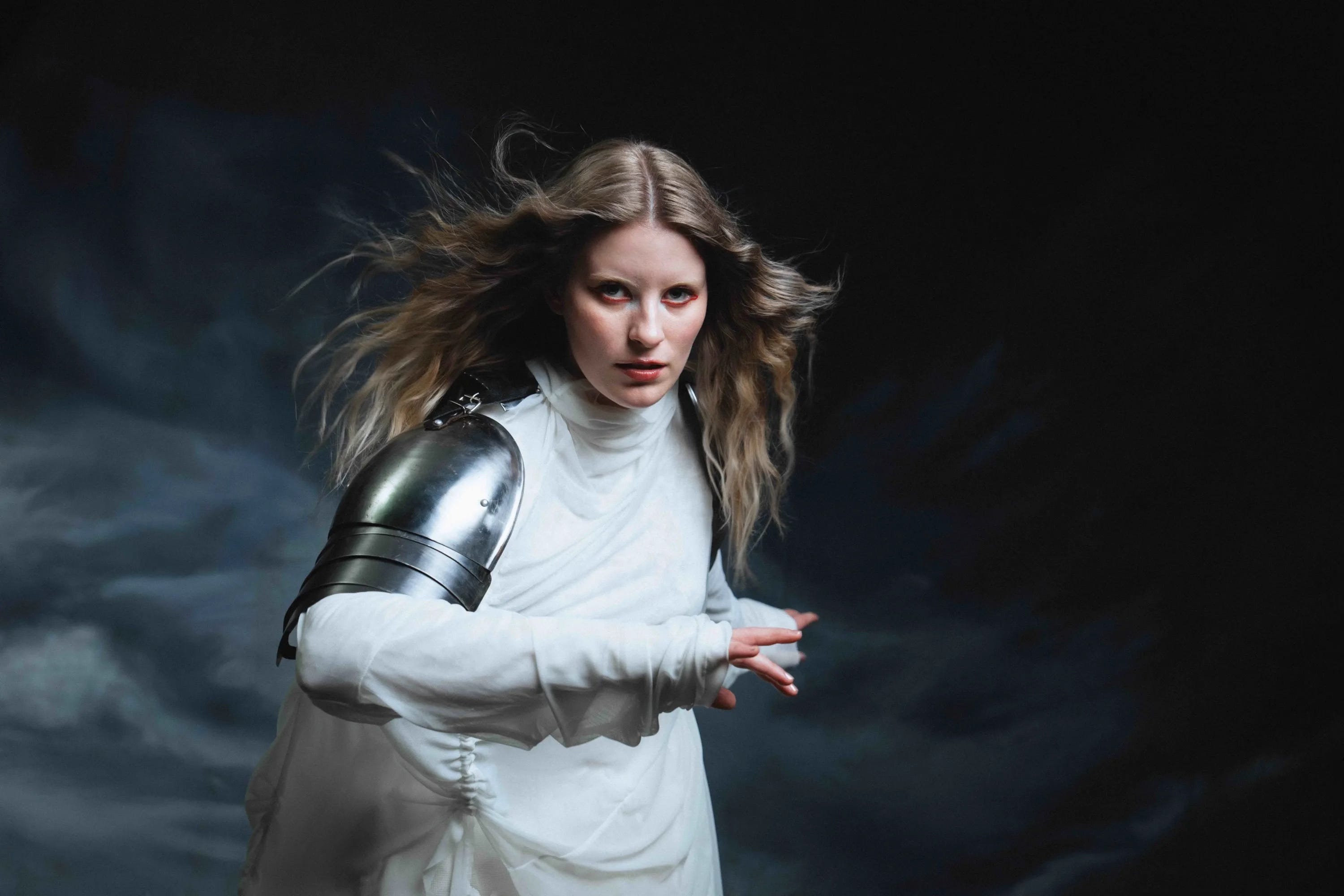
Sitting in the lineage of the likes of Florence + The Machine and AURORA, the British singer-songwriter is not one to shy away in her music. She rose to prominence in the past few years with her dark-pop-indie-folk musings, all woven with a candor that is both personal and universal.
Layered with lush instrumentations, powerful vocals and striking lyricism, her music blends vulnerability with conviction, often through the lens of mythological storytelling - all while seeking to dismantle the patriarchal systems under which we live.
This energy crystallized in 2023’s “Labour” - a thumping, gorgeous piece of feminine rage that calls into question the myriad unremunerated work placed on the shoulders of women. The track found itself viral on TikTok and quickly snowballed into an outlet for women to share their experiences and struggles with sexism. It became her first chart hit in both her native UK - where it neared the top 20 - and the US.
Paloma’s debut studio album, Cacophony, followed in 2024 to critical praise and was supported by a European tour. Two years later, she is expanding her world with her sophomore record The Fatal Flaw - due out September 4th.
Pop Crave sat down with the star after her set at Syd For Solen in Copenhagen to discuss the new album, the aftermath of “Labour,” her experience on the road and more.
Your new album, The Fatal Flaw, is coming out next month. What were your main inspirations behind the record?
I knew that I wanted to make something that engaged really deeply with my background in fine art and history of art. So that’s why it feels so historical because the different inspirations for different songs are taken from artists or certain art movements or things that have inspired me to make art: from some really mundane things to Greek mythology. I was immensely inspired by human-made art. The first album felt archeological in a way and this one feels like an art gallery, it’s kind of nice to feel like they’re different kinds of museums.
Was the approach to making this album different to that of your first?
It really was. I am so impatient and my first album, like many people’s first albums, was an absolute learning curve. The songs had a less tight relationship to each other because they were written not really intended to be for an album. Then when I realized I could do an album, I curated them and then continued writing and made it what it was. With this album, from the first song I wrote it knowing that it was going to be an album so all the songs are tied very tightly to each other conceptually. Certain songs have sister songs and continuations of certain themes. It feels like a really tightly-woven tapestry, which I set out to do and I was really fixed on doing.
The title is taken from The Secret History. Did you set out creating the album with that title in mind?
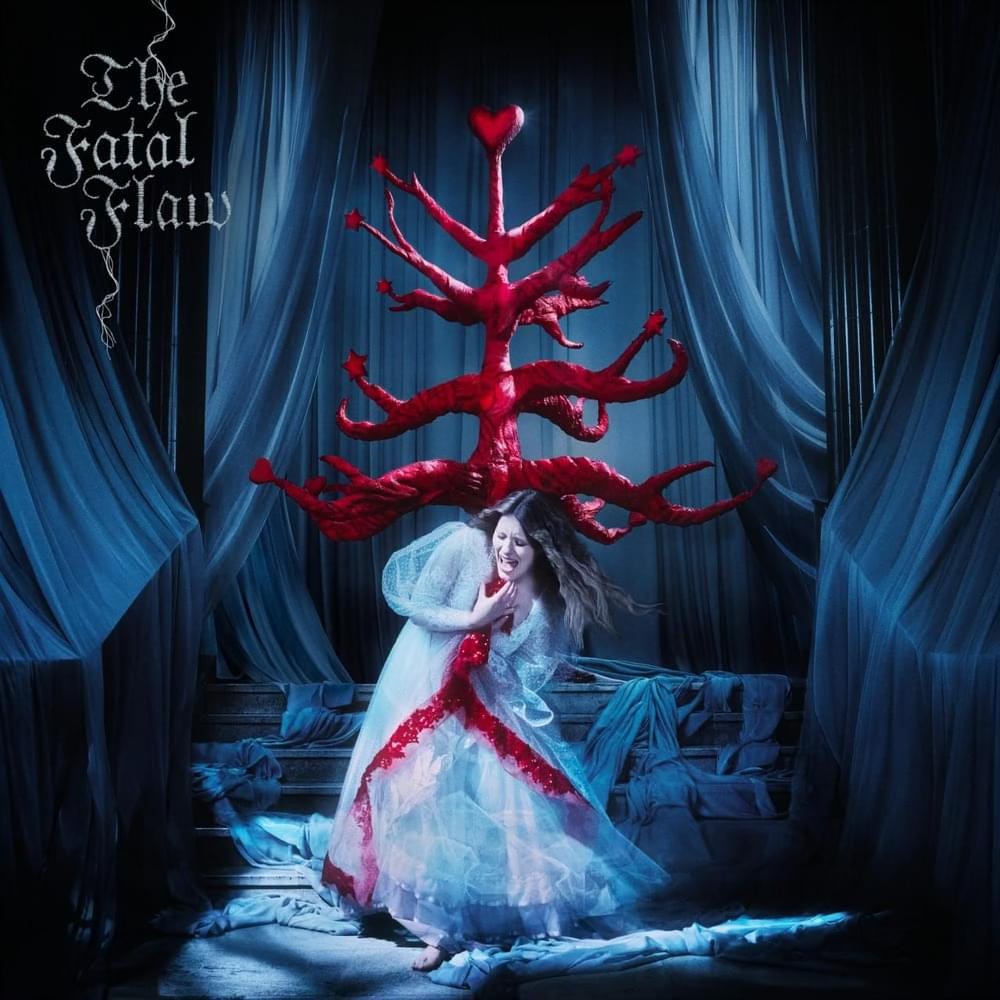
I didn’t. It’s so funny knowing something so intimately but not having a name for it, and that’s how I felt with this album. I had the images of what it looked like in my head. The Fatal Flaw was such a landing arrival, like, ‘Oh my God - that’s that title of this.’ There are these themes on the album that feel like you’re digging into yourself and I have this motif of the red tree that I imagine as something that has taken root in my heart and runs through all my veins and emotions and my mind and the art that I make, making it what’s mine.
I named it ‘The Fatal Flaw’ for two reasons. The line that it’s taken from is ‘Does such a thing as the fatal flaw, that showy, dark crack running through a life, exist outside literature?’ I was really seduced by that idea that we could boil down our lives to something as profound and simple as that. That’s the question, right, because I’m not sure you can. These songs are all endeavouring to try and do that in a way and try and find an importance and profoundness of these emotions.
Why it seems so fitting to name it after a line in The Secret History is because of one of the main themes in that book. They talk so much about the things you find beautiful and the things that you long for and love are also the things that you are terrified by and in awe of. This album, I was so tightly-woven to the idea of the sublime and that exact idea. These are songs about love and some of the imagery in them is really grotesque. Toxic love is spoken about in a very gory, bleeding way. It really reminded me of the book.
Has the continued success of “Labour” guided you in any way when making this album?
“Labour” is a presence of its own and I’m so glad it’s there in my life. I wouldn’t know if it’s guided - it’s definitely prompted the next thoughts in what I would think that dialogue is between me and the audience. It was written at a time when I had a less solidly captive audience and then [it went viral] and after that I wrote songs like “Good Boy“ because I thought, ‘I have a captive audience. I don’t want to continue writing about the same thing when it comes to feminism and being a female writer.
“Labour” is a song for me that is incredibly layered and carries a lot of nuance, but what happens when songs get that big and seen by so many people is they inevitably get reduced somewhat. I didn’t want to continue writing songs that people expect of me. I wanted to write with nuance and write with like, ‘OK, what’s the next productive point in this conversation?’ Songs like “Good Boy” came out of that and a lot of the songs on this album are intrinsically linked to masculinity.
Songs like “Pyrrhus” and “Beautiful Birds” engage with what it is to be a woman and love men but witness the male loneliness epidemic and violence at the hands of men. So a lot of songs of this album are endeavouring to take the next step in that dialogue.
Something quite powerful about “Good Boy” is that it’s not necessarily a takedown of men themselves, but trying to make them aware of the system that is failing them, too. How important was it for you to get that nuance into the song?
It was really important and really difficult. I think we’re witnessing mass allergy to nuance in media at the moment. Two things can be true: men can immensely suffer under patriarchy and a lot of men also perpetuate immense violence through it. I can try as much as I can to reconcile all of that nuance in one song. Because this album is all about love, and I love men and have men in my life that are loving. I've had many relationships very much tainted by patriarchy.
There’s this theme on the album of unpacking masculinity. I was really inspired by bell hooks’ while writing these songs because she writes about men in her books All About Love and The Will to Change with such love while also being so uncompromising and with such clarity when it comes to the patriarchy.
On ‘Miyazaki’ you sing about your love for human art, and on stage just now you spoke out against generative AI. What is it like navigating the music industry as it seems to be increasingly embracing AI technologies?
Honestly, I have a wonderful team around me. They know my values and I stick to my guns in terms of where AI would be normalized to use for certain things in my project. When it comes to streaming and AI streaming, I’ve been really chuffed the last few days with some of the wins, like Spotify now having AI artists badged and taking them off the algorithmic playlists.
That’s why it’s really important to use your voice for that, even if you’re not a musician. Before us, it was animators who were some of the people whose jobs were so threatened by AI. I think as artists we have to talk about it as a whole problem, and not just like, ‘Oh, now it’s affecting artists, now it’s affecting musicians, now it’s affecting coders.’ It’s something that everybody I work with knows that I don’t really budge on.
Do you find live music to be a sacred space free from AI, especially with the aspect of human connection?
That’s a really nice way of putting it. It’s the most immediate part of what we do and the part that can’t be replicated by AI.

You’ve been on the road all summer. What have been some of your highlights from festival season?
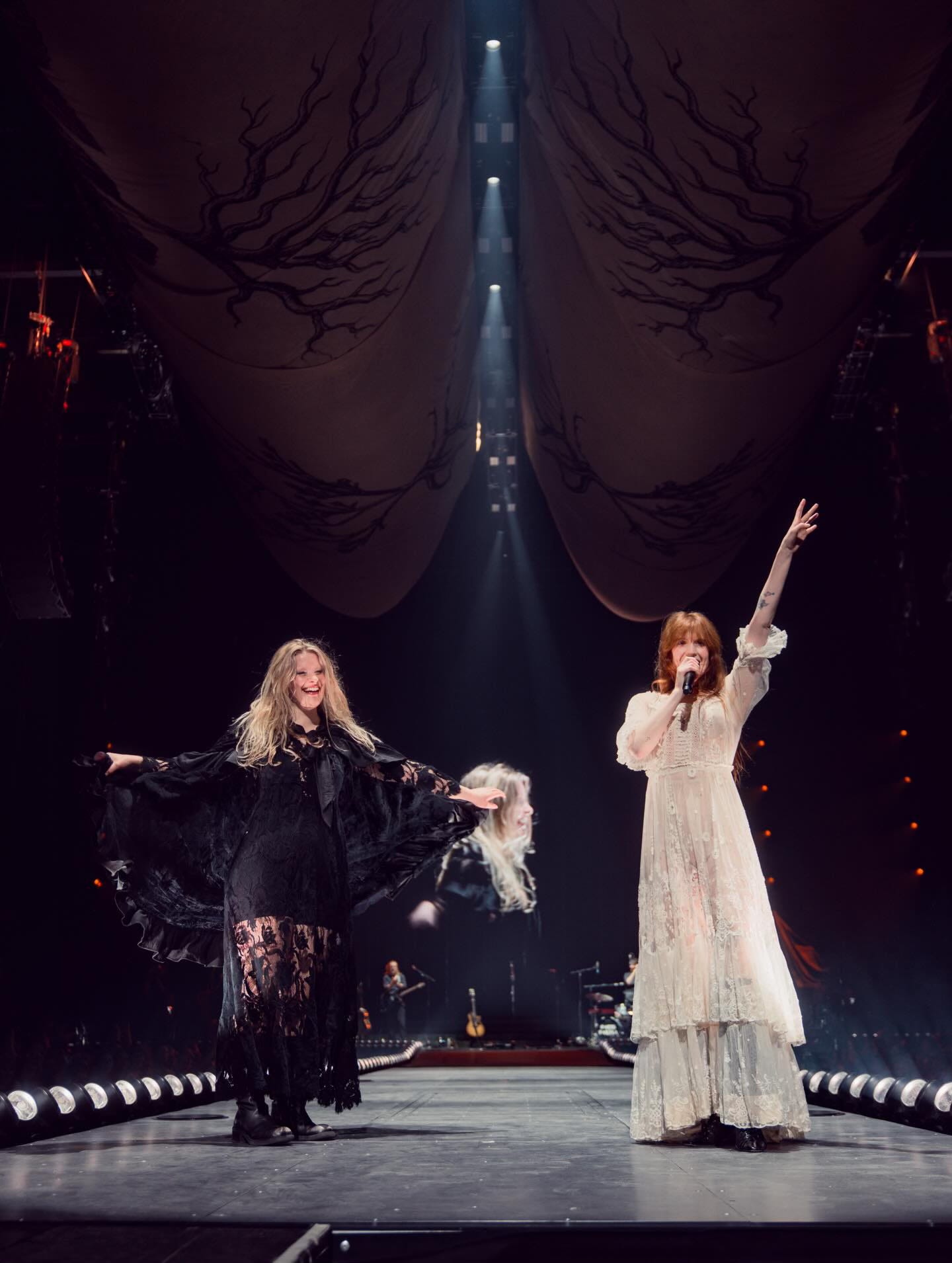
I love going down to barrier to all the fans at festivals. It’s different every time and you try and find a way to make it work to be really close to them. I love seeing people backstage who I don’t always get to see. My friend Sofia Isella, we did a few festivals on the same days so I had her come and join me on stage twice. That’s the kind of thing that’s difficult to make happen when you’re on tour sometimes, and festivals feel like this massive melting pot. I hung out with the CMAT gang a little bit, they were so delightful.
It’s nice during festival season to not feel like you’re all artists who are racehorses in your own lane and just have a bit of fun.
Is it less isolating perhaps than a tour?
Kind of. You know everyone’s on the circuit so you’re looking around being like, ‘Oh, who’s here today? Anybody that I know?’ Yesterday, I saw all of the Florence + The Machine band and crew and got to catch up with her as well which was lovely cause I hadn’t seen her in person since I opened for her back in February. You see everybody at the airport and it’s like summer camp cause everybody knows each other.
What was the experience of opening for Florence like? How was it performing “Labour” together?
That was her idea, she offered to join me. She’s so iconic that she can be the special guest at her own show! It was the most brilliant time, it was so busy but I grew so much. It was such a formative experience. Just the stages that we were playing. I’m very lucky to have been put on a tour as an opener where it felt like such a good match of my listeners and her listeners. People were so engaged and excited. It was so wonderful for the community of my fans to grow that way. And watching her every night was like a field trip. You get so inspired seeing artists like that, who are so incredible at they do.
Did she give you any advice?
She told me to get off social media. She told me that yesterday. I’m already very much planning on doing that. It’s hard, there’s a push and pull. I don’t enjoy spending time on social media but it’s some of the only spaces, apart from live shows, that I get to be totally up-to-date with what my fans are doing and saying and thinking. It’s connection but I'm definitely looking to extricate myself from the digital world.
What do you hope is the main feeling or message that fans take from your album or seeing you on tour?
I hope they feel seen. Watching them sing, looking at the things that they’re saying on line. I make music for a reason and they listen to music for a reason, but I think that reason is the same. I went a really long time feeling very unheard and like I had no voice and like my feelings weren’t important, and I would really reduce them. I think the fans feel like their feelings are suddenly seen for what they are. Massive and heavy and disastrous sometimes and beautiful some other times. It allows them to take up the space that they should take up.
To end on a fun note, what have been three songs that have defined your summer?
“Pass Out” by Tinie Tempah. I made myself a playlist the other day titled ‘Getting Through the Motherf**king Album’ and it’s all British pop and 2010s pop.
An amazing song that I’ve been talking about so much is “Where Have All The Cowboys Gone?” by Paula Cole. I’ve been listening to it so much and it was definitely soundtracking a lot of my summer.
How do I tie these together? “4 Minutes” by Madonna and Justin Timberlake. That’s most of what I’ve been listening to this summer.
Paris Paloma’s new album The Fatal Flaw is out September 4th.